
There is something wonderful about the weeks leading up to an ocean crossing.
The provisioning lists get longer. Spare parts find their way into every available locker. Rigging is inspected, sails are checked, weather forecasts become a daily obsession, and someone inevitably discovers one more job that absolutely must be done before departure.
For those of us who have spent years living aboard and crossing oceans, it’s a familiar ritual.
And no matter how many miles you’ve sailed, there’s always that moment when you look around the boat and ask yourself: Are we really ready?
We tend to think about readiness in terms of individual systems.
Is the autopilot working? Are the batteries healthy? Is the radar functioning? Have we tested the bilge pumps? Are the navigation instruments calibrated? Do we have the latest weather forecasts?
All important questions.
But after years of offshore sailing, I’ve come to believe there’s another question worth asking.
Do all those systems actually work together in a way that helps us understand what’s happening aboard?
A Boat Can Be Full of Technology and Still Leave You Guessing
Modern cruising yachts are extraordinary machines.
Even relatively modest boats can have sophisticated navigation electronics, multiple communication systems, electrical generation and storage, digital switching, engine monitoring, tank sensors, alarms, and increasingly complex networks connecting everything together.
Larger bluewater yachts can take that complexity to another level.
Yet much of this technology has traditionally been developed and installed as separate systems, each designed to perform its own particular job.
The chartplotter handles navigation. The battery monitor reports electrical information. The engine display tells us what’s happening with propulsion. Another panel manages switching. The weather application provides forecasts. Maintenance information lives somewhere else entirely.
Each system may be excellent at what it does.
The problem is that the skipper is often left to do the integration mentally.
And that’s a considerable responsibility when you’re offshore.
The Middle of the Night Is a Terrible Time to Start Investigating
Imagine you’re several days into an Atlantic crossing.
It’s 2 a.m. The boat is sailing comfortably, the autopilot is steering, and most of the crew is asleep.
You notice the battery state of charge is falling faster than expected.
Nothing has failed. There may not even be an alarm.
But something has changed.
Perhaps the refrigeration is cycling more frequently. Perhaps the autopilot is working harder in the sea conditions. Perhaps a charging source isn’t delivering what it should.
Or perhaps the battery monitor is simply reporting information that needs to be interpreted in context.
On a conventional installation, understanding the situation might involve checking several displays, reviewing different pieces of information, and working out whether there’s actually a problem.
Experienced sailors become remarkably good at doing this.
But should we have to?
A more intelligent onboard system should help us recognize when something has changed, understand which other systems might be involved, and decide whether action is necessary.
Not by overwhelming us with more information.
By helping us make sense of the information we already have.
The Boat Doesn’t Know That You’re Crossing an Ocean
This is another aspect of marine technology that I’ve always found interesting.
The boat’s equipment knows an extraordinary amount about its individual functions.
The autopilot knows how hard it’s working to maintain a course. The electrical system knows how much energy is being consumed. The navigation instruments know the wind, speed, heading and position.
But these systems don’t necessarily understand the broader situation.
They don’t inherently know whether you’re approaching a difficult landfall, sailing through unsettled weather, or trying to preserve electrical power for another night offshore.
And even when the information is available somewhere aboard, it may not be presented in a way that helps the person on watch.
This is where I believe marine technology needs to evolve.
The next step isn’t simply connecting more equipment.
It’s creating an operating environment that can understand relationships between systems and help the crew recognize what matters in the circumstances.
There is a significant difference between knowing the battery is at 55% and understanding whether the current pattern of consumption is sustainable.
Or between displaying wind speed and recognizing that actual sailing performance is no longer matching what the boat should be capable of in the prevailing conditions.
Those are the kinds of relationships that become particularly valuable offshore.
Different People Need Different Information
One of the things we learned during our years living aboard was that there is no single ideal display for everyone on a boat.
The person steering through a narrow channel needs very different information from someone monitoring the electrical system at anchor.
An offshore watchkeeper may want navigation, wind, AIS and relevant alerts immediately visible.
The skipper planning tomorrow’s passage may be concentrating on weather models, routing options and expected arrival conditions.
Someone belowdecks might simply want to check the boat’s position, the battery state and whether everything is operating normally.
These are different jobs.
Yet marine electronics have often been organized around individual pieces of equipment or fixed displays rather than around the people using them.
I think that’s backwards.
The information should follow the person and the task, not be dictated by which manufacturer’s screen happens to be installed at a particular location.
And nobody should have to buy another proprietary display simply because they want to see information somewhere else aboard.
Intelligence Also Means Knowing When Information Cannot Be Trusted
There’s another issue that deserves more attention.
We tend to assume that if a number appears on a display, it’s correct.
But anyone who has spent enough time maintaining a cruising yacht knows that isn’t always true.
Sensors drift. Connections deteriorate. Networks become overloaded. Equipment stops communicating. Occasionally, two devices provide conflicting information.
The display may continue to look perfectly normal.
That’s why I believe an intelligent vessel system needs to do more than collect and present data.
It should also help identify missing, inconsistent or potentially unreliable information.
Sometimes the most important thing a system can tell you isn’t what it knows.
It’s what it doesn’t know.
For an offshore crew making decisions far from assistance, that distinction matters.
A Beautiful Oyster 65 Prepares for the Atlantic

These questions are particularly close to my heart this week.
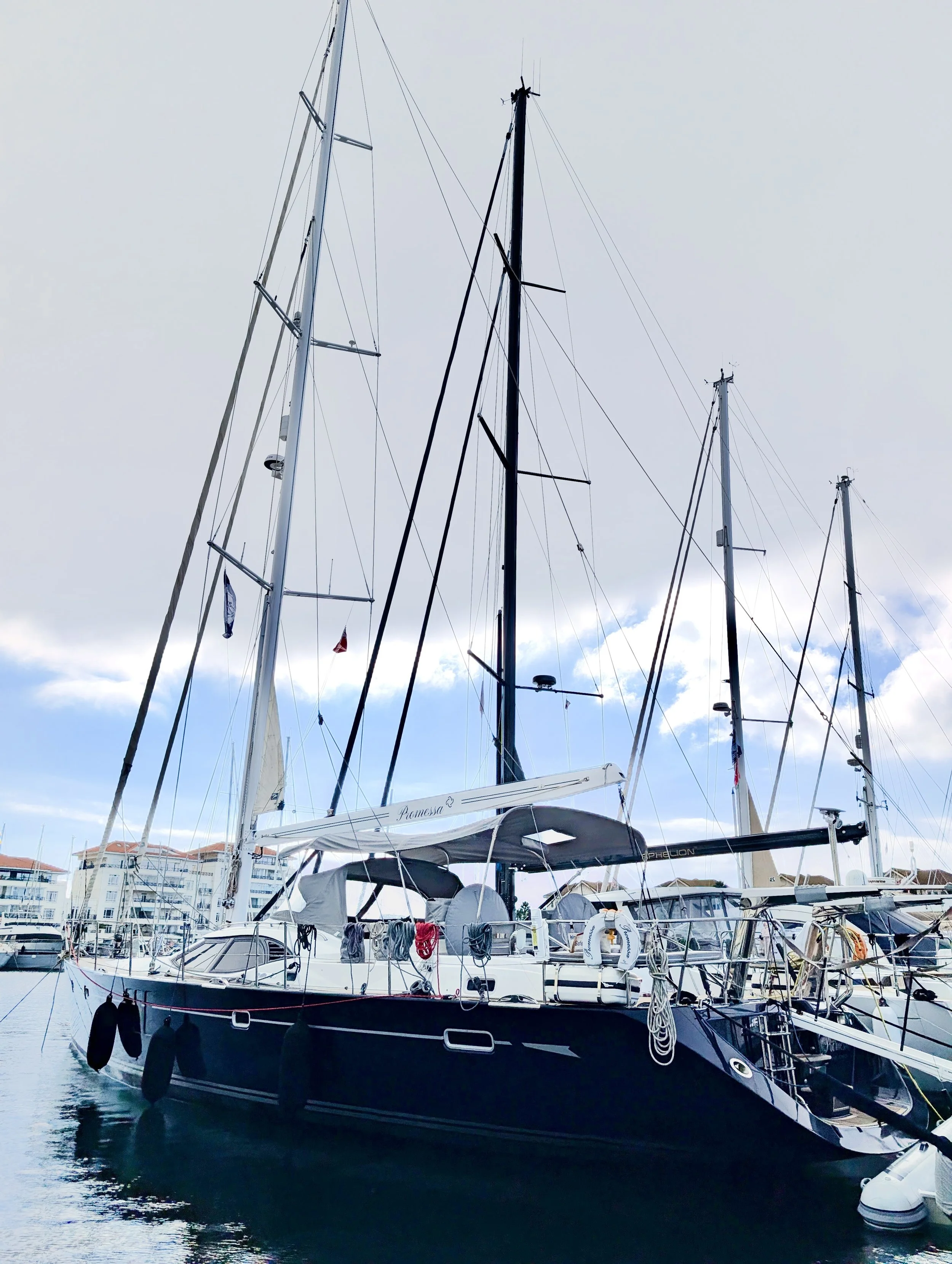
We’ve just welcomed S/V Promessa, Ryan O’Leary’s beautiful Oyster 65, to the Zora family.
Promessa and her crew are preparing for the Atlantic Rally for Cruisers (ARC), departing Gran Canaria on November 22 for the crossing to Saint Lucia.
And this is only the beginning of her adventures. Promessa is also planning to participate in the upcoming Oyster World Rally.
Having spent years sailing across oceans ourselves, there’s something special about seeing Zora installed aboard a yacht preparing for the kind of passages that inspired us to develop it in the first place.
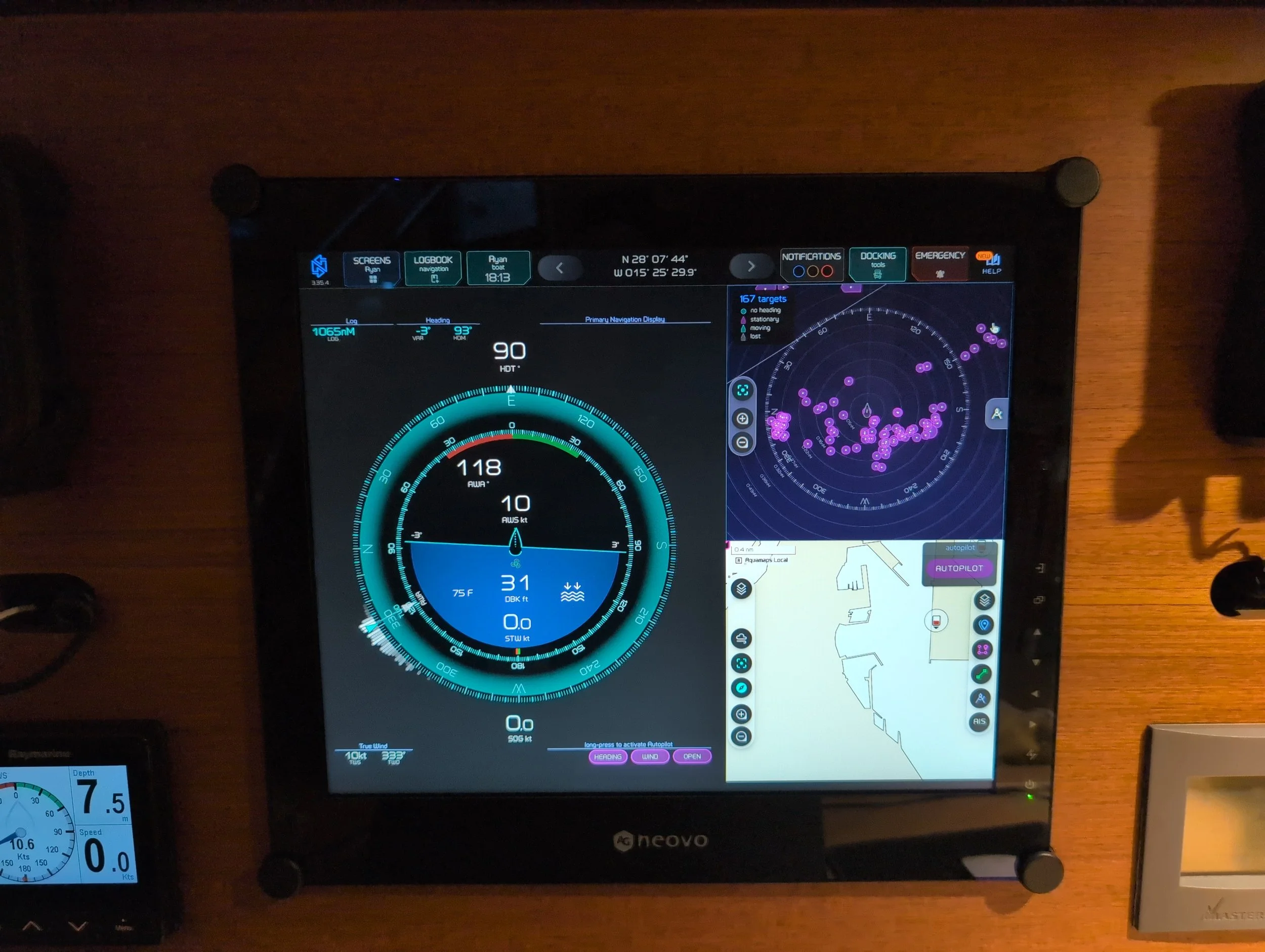
Zora is our approach to bringing a yacht’s navigation, weather, performance, electrical systems, equipment and operational information together in one onboard operating system.
It runs on a dedicated server aboard the yacht, so the system remains aboard and operational even when there’s no Internet connection.
The crew can access it from compatible displays, tablets, computers or phones, with each person choosing the information relevant to them.
Our longer-term work is focused on helping those connected systems become increasingly intelligent about how the yacht is actually operating.
Promessa’s installation is complete, and we’re looking forward to following her Atlantic crossing and the adventures ahead. As with any real-world installation, the experience of the crew will be invaluable.
The Best Technology Should Make Sailing Simpler
I sometimes wonder whether we’ve confused the sophistication of marine technology with the sophistication of the experience it provides.
A yacht can have an extraordinary amount of technology aboard and still require its crew to spend too much time managing it.
The objective shouldn’t be to create another screen full of information.
It should be to reduce the work required to understand what’s happening, recognize developing problems and make good decisions.
Because offshore sailing already asks a great deal of us.
We navigate, manage weather, maintain equipment, conserve resources, stand watches and look after one another.
The technology aboard should make those responsibilities easier, not add another layer of complexity.
After all, we didn’t go sailing because we wanted to spend our lives troubleshooting electronics.
We went sailing because we love being at sea.
And that’s what the technology should help us enjoy.
A question for fellow offshore sailors:
When you’re preparing for a long passage, do you think about your onboard electronics as individual systems that need checking, or as one operating environment that needs to work together?
I’d be interested to hear how you approach it, particularly if you’ve completed an ocean crossing.